Playbooks
How to Build Your Crypto Project's ICP List in Dopamyn (8 Recipes)

The hardest question for any Web3 founder isn't "what should I post" — it's "who am I even targeting?" Your ICP (ideal customer profile) is the answer: the specific set of accounts most likely to become your users, holders, or partners. In Dopamyn, that profile isn't a slide — it's a list: a targeted set of X accounts you can build, save, and turn into a campaign.
This guide gives you eight concrete recipes for building that list, from your broad addressable audience down to the warmest, highest-intent segments.
Why an ICP list beats a follower count
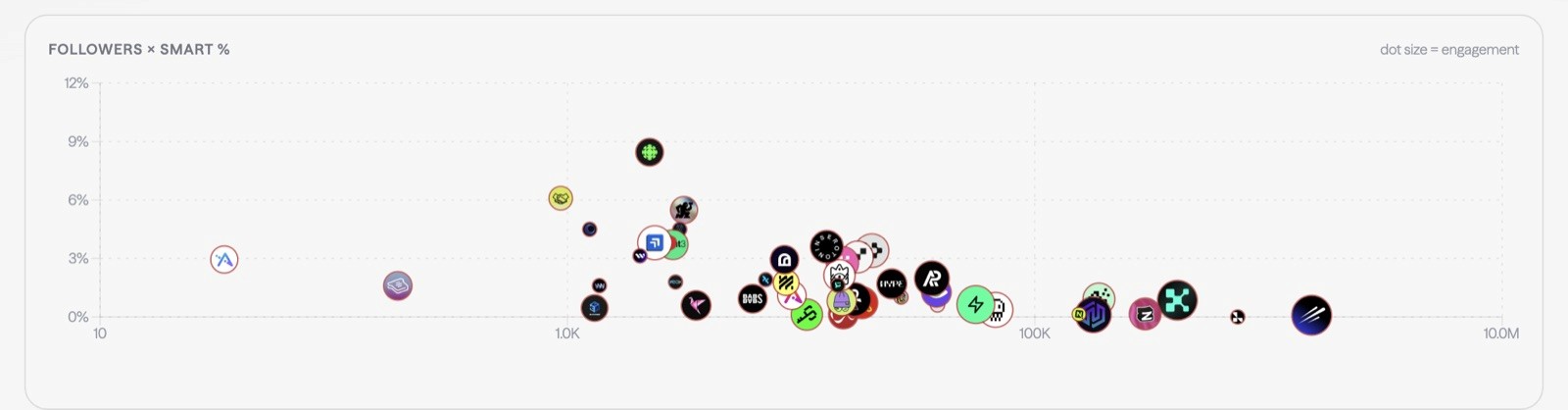
A big follower number tells you how many people could see a post. An ICP list tells you who actually matters — the accounts whose audience overlaps with the users you want. Targeting by relevance and quality (real, engaged, in-category followers) consistently beats targeting by raw size. For the deeper version of this argument, see how to find the right KOLs and what mindshare is.
The engine: pick a source, apply filters
Every list in Dopamyn is built the same way — a source plus filters:
Sources (where the accounts come from): search the Directory, the followers a competitor and you share, accounts whose audience overlaps yours, the guest list of an event, or AI matchmaking that scores accounts against your project.
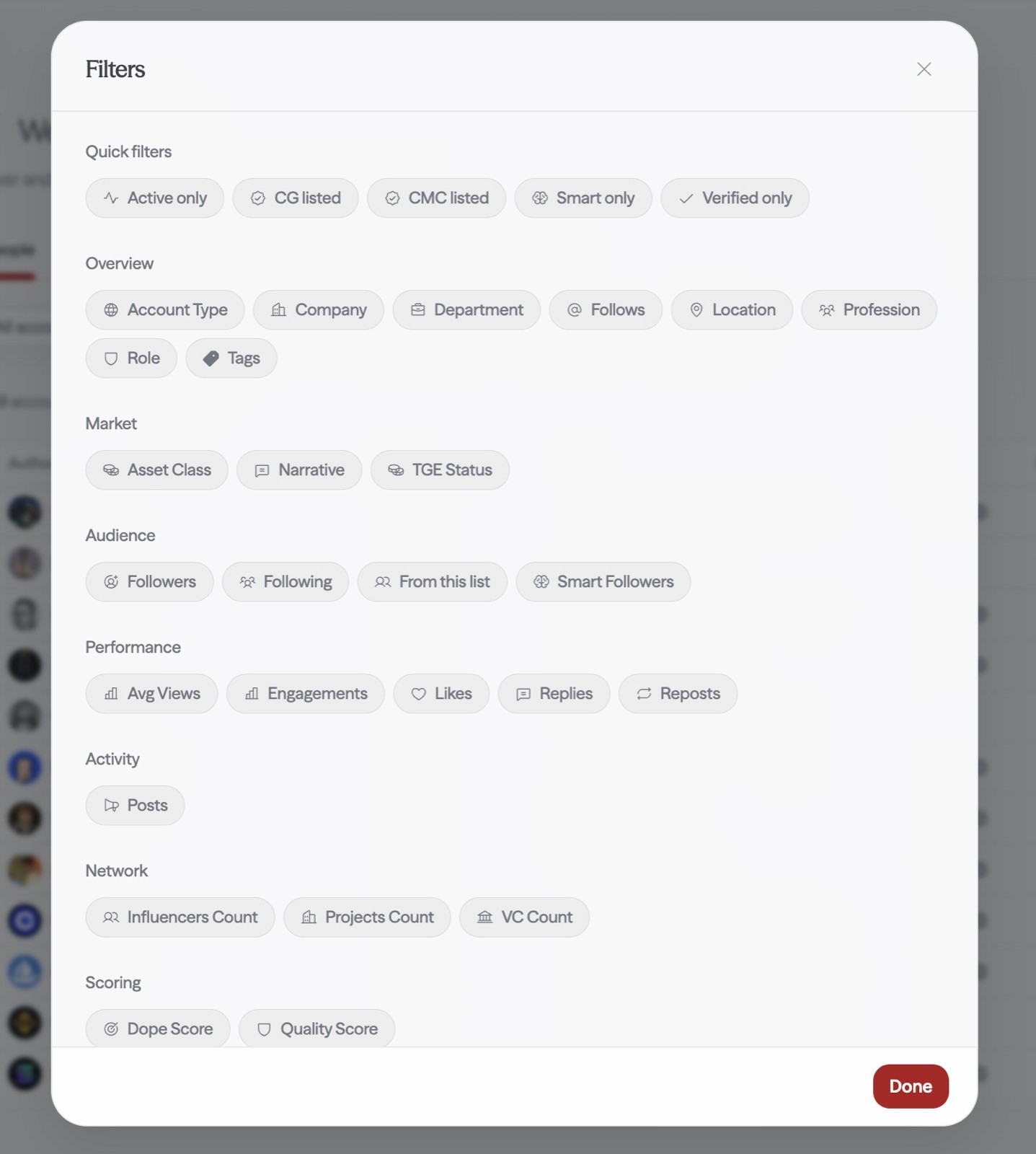
Filters (how you narrow it): size, quality signals (like smart followers and a quality score), topic or asset class (DeFi, NFT, perps, RWA, and more), identity (account type, profession, narrative), and network (who they already follow).
Compose a source with a few filters and you have a list. Save it as an Audience, and it becomes the input to a campaign, outreach, or analysis.
8 ICP-list recipes
1. Your ICP master list
Start broad: in the Directory, filter by the account type and narrative that define your market, then add a smart-followers floor so you only keep credible accounts. Save it — this is your top-level addressable audience, and its size is a real, bottom-up estimate of your reachable market.
2. The beachhead list
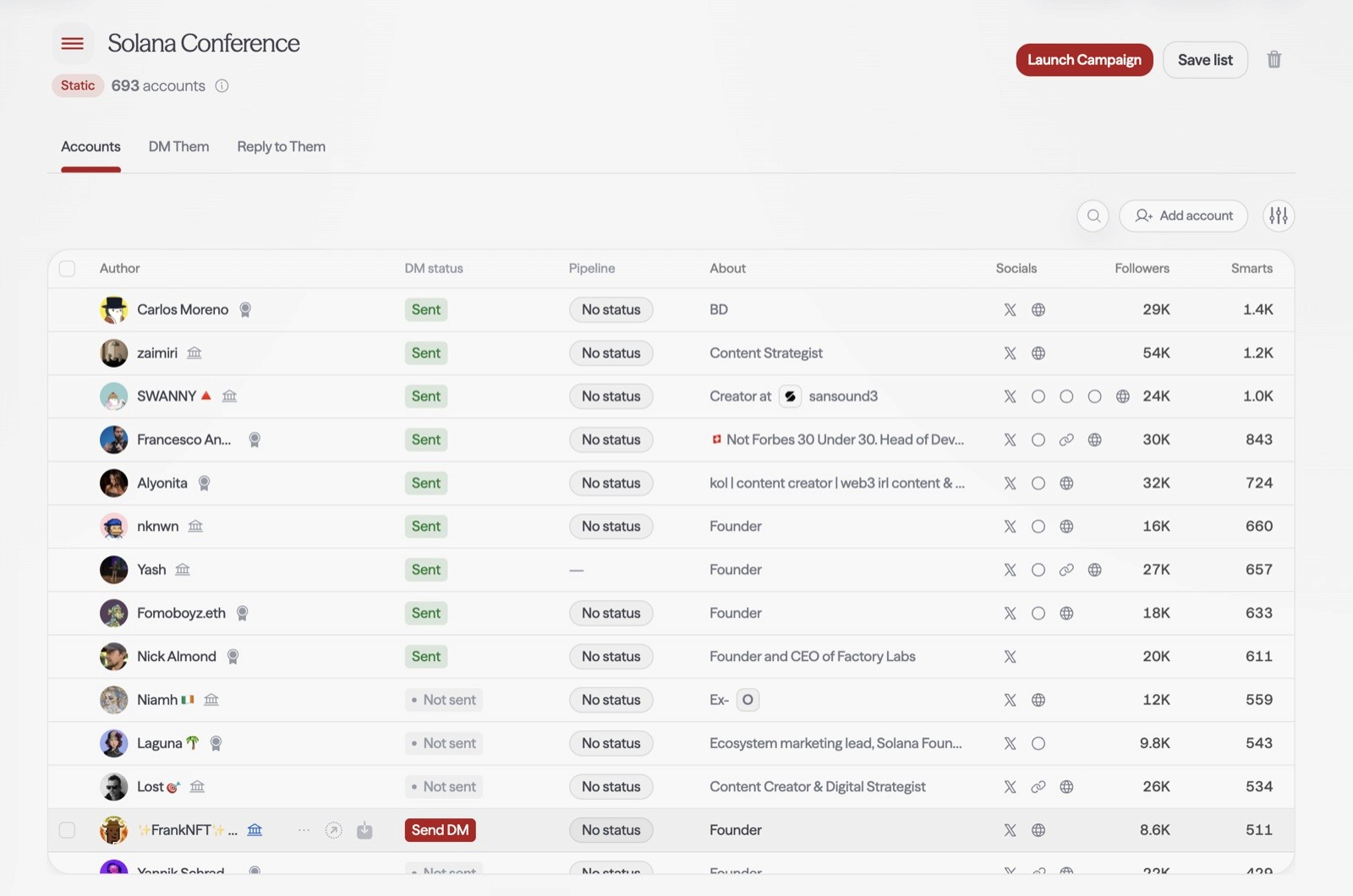
Now go narrow. Tighten the same filters to a single asset class, a high quality score, and verified accounts only. This smallest, highest-fit slice is where you run your first campaign — the place you're most likely to win.
3. Tiered segments (AI matchmaking)
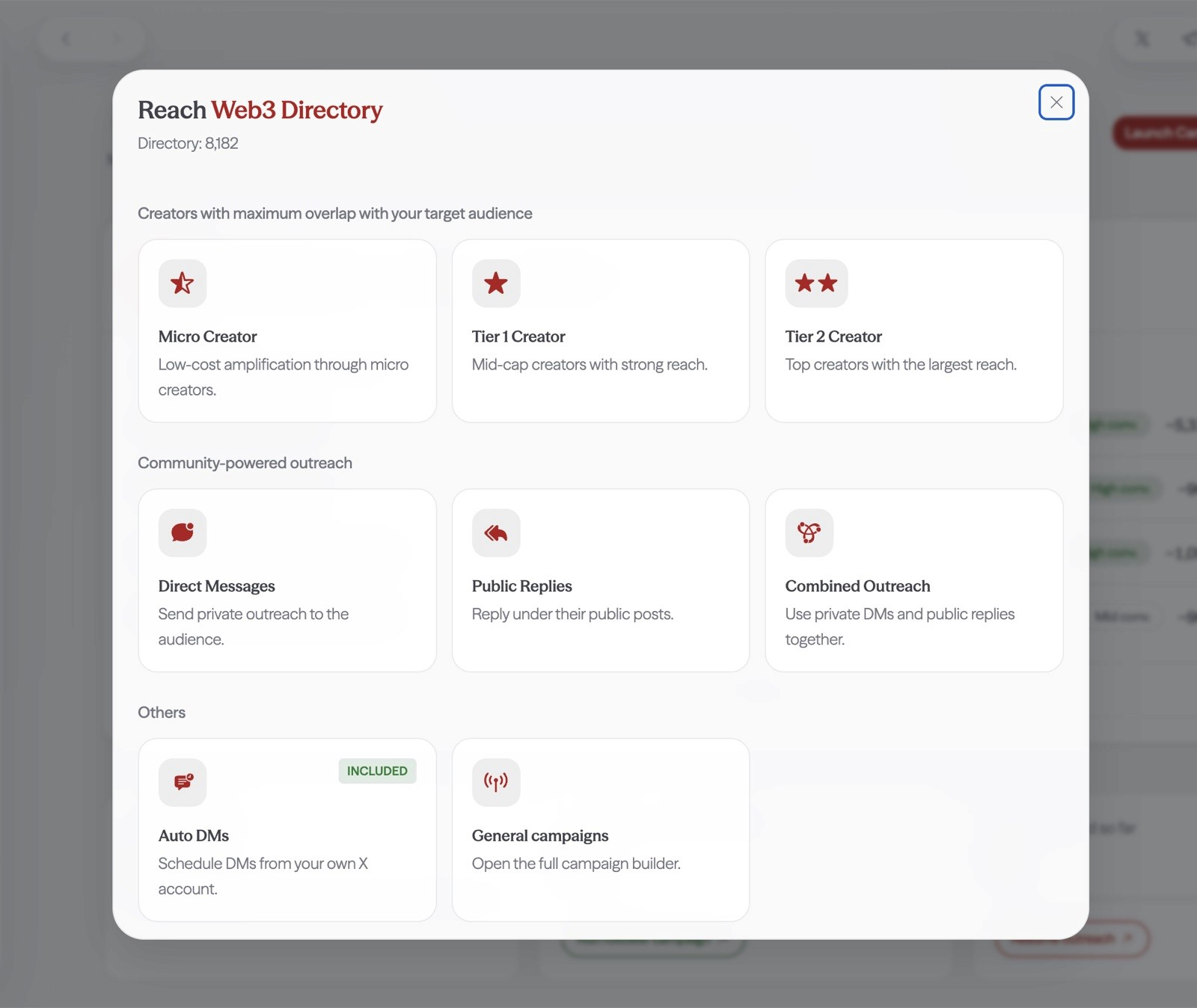
Let matchmaking score accounts against your project and split the results into tier 1 / 2 / 3. Work the tiers in order so your budget and attention go to the best-fit accounts first.
4. Competitor-audience poach
Add a competitor to a watchlist and pull the followers you have in common — then keep only the ones who match your ICP. These are people already interested in your category who aren't yet following you. Perfect seed for an awareness or follow campaign.
5. Lookalikes
Take your best-performing accounts and find the audiences that overlap with them. This surfaces adjacent communities you'd never have searched for by hand — ideal for KOL collaborations.
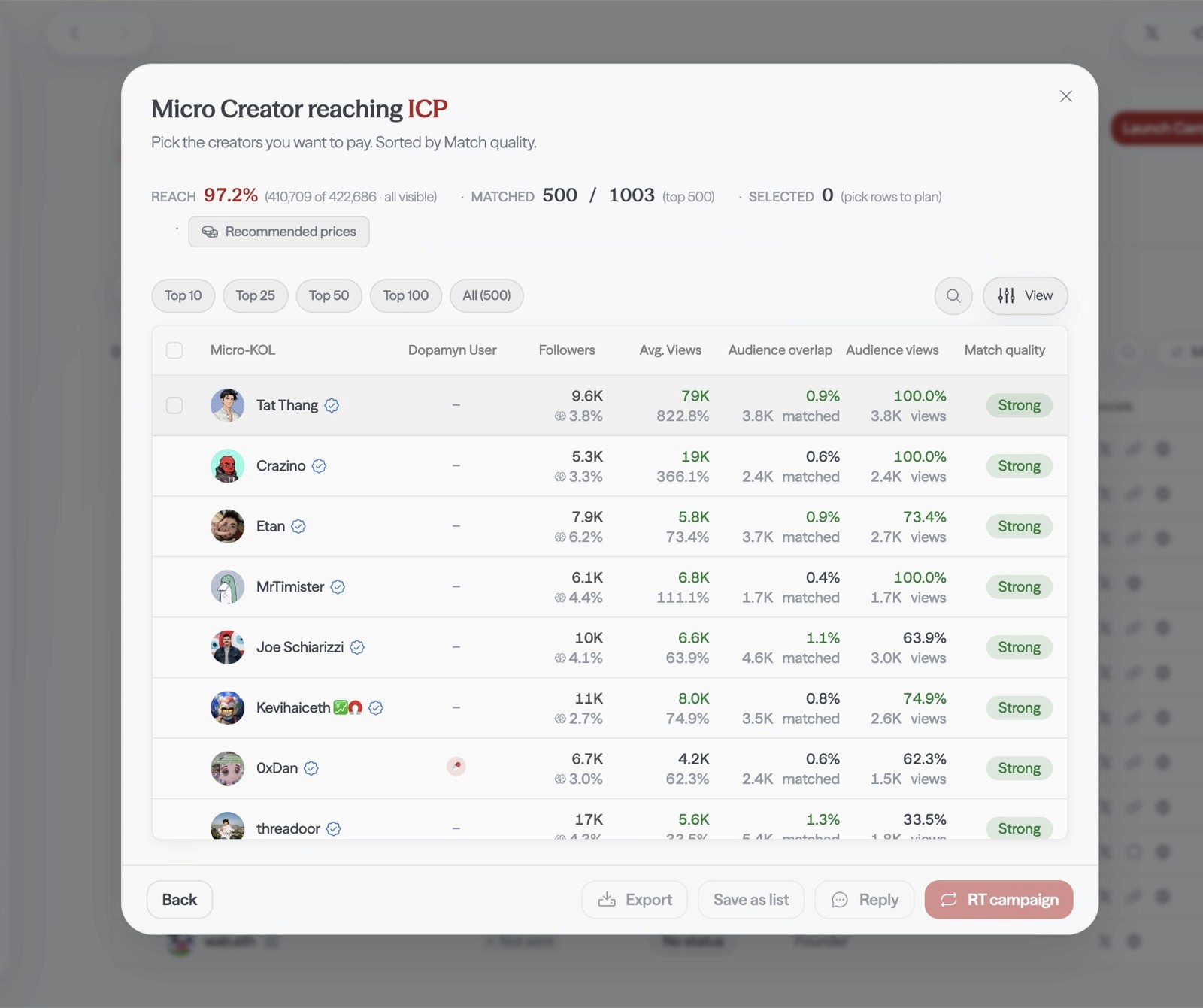
6. Matched-KOL shortlist
Use matchmaking to rank creators by synergy and credibility with your project, not by follower count. The output is a shortlist of KOLs actually worth briefing for a campaign.
7. Whitespace & mindshare
Find the ICP accounts that follow your competitors but not you — your whitespace — and watch which accounts hold the most mindshare in your category. Together they tell you where to focus to win share of the conversation.
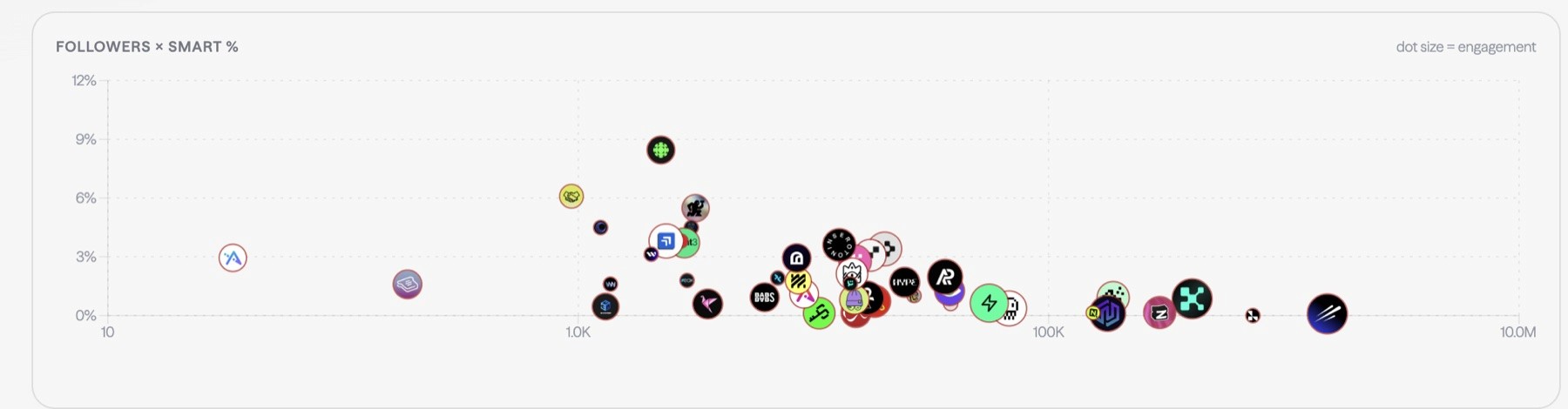
8. Topical prospect list
Filter the Directory by who actively tweets about your asset class — the people already talking about your space. They're the warmest audience for narrative-led campaigns.
From a list to a result — and back to a better list
A list is inert until it drives an action. The flow:
Build the list (source + filters) and save it as an Audience.
Point it at a campaign, DM outreach, or your pipeline.
Rewards settle on-chain only for verified actions.
Read the results, then refine the list — tighten your filters around the accounts and segments that performed, drop the ones that didn't, and re-run the source for your next campaign.
That last step is the whole point: each campaign teaches you something about your ICP, so every list you build is sharper than the last.
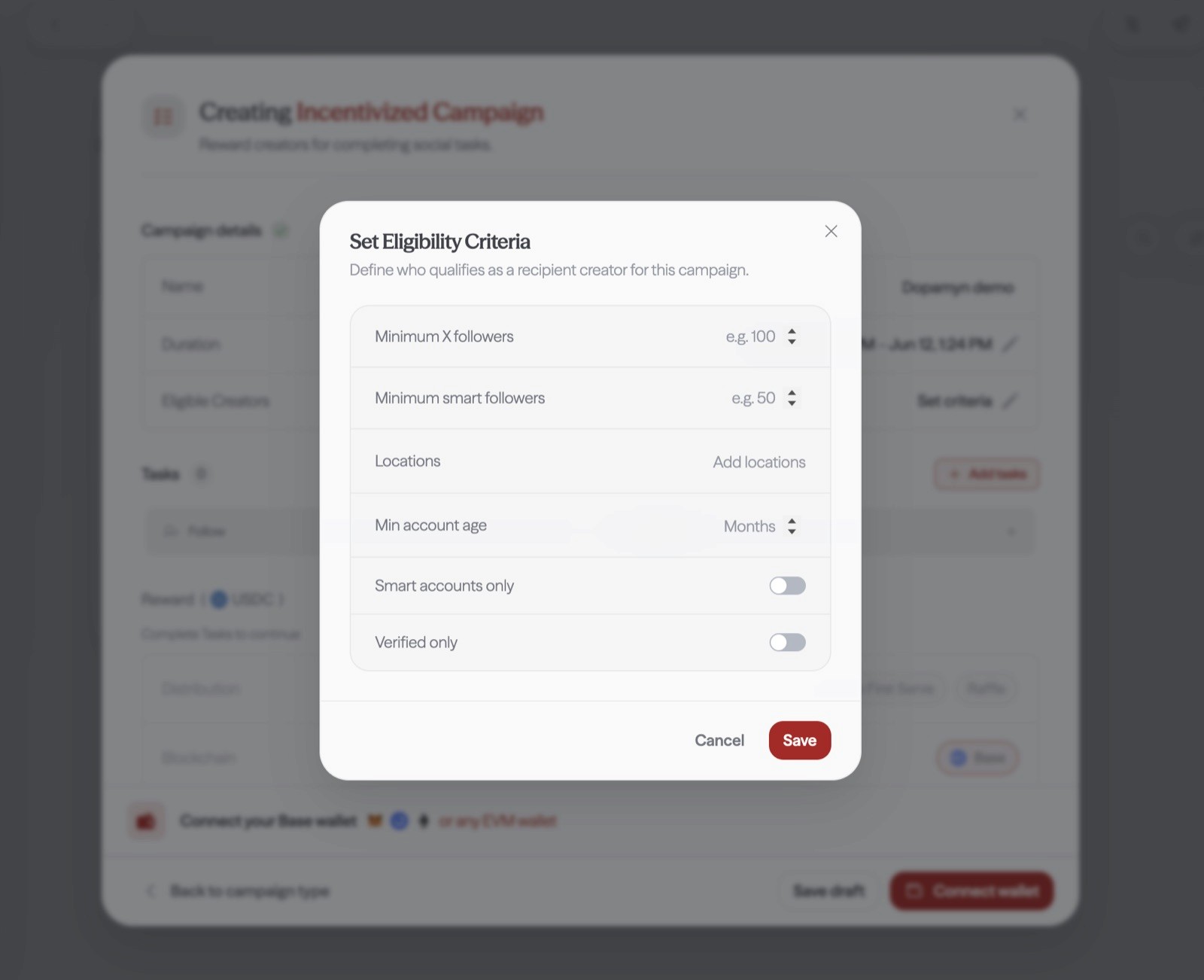
Build your ICP list
Your ICP list is the first thing to build and the asset everything else runs on. Start from the for-projects page, and for the deeper plays see the Web3 list-building playbook, the Directory guide, and audience overlap analysis.